How to Style Your NBR Hair Extensions When You Don't Have Time for a Wash
March 1, 2021


The short version:
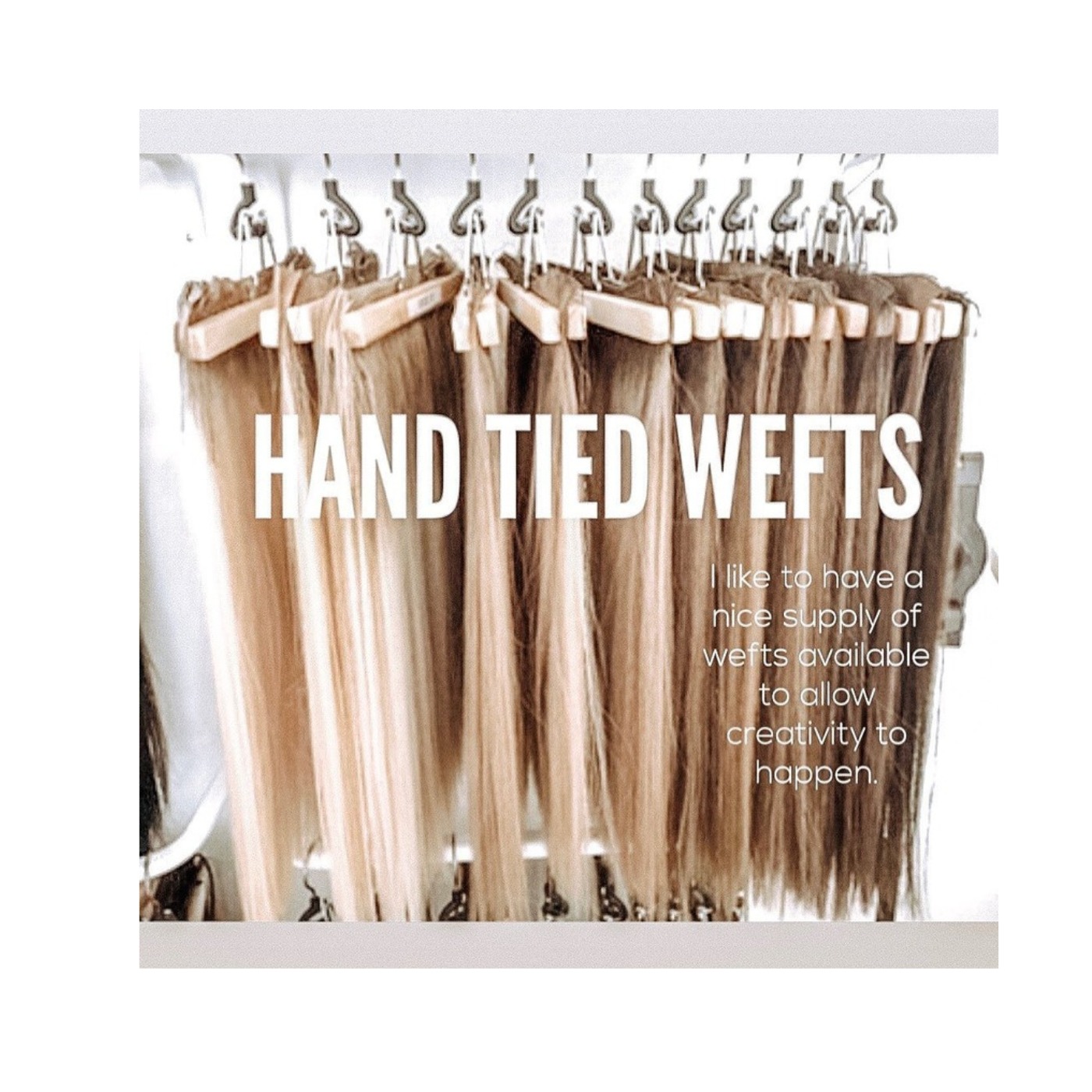
A weft is simply a strip of hair extension. How that strip is made, by hand or by machine, changes everything about how it feels and wears. Here is the honest difference, and why I reach for a hand-tied weft on almost every client.
A weft is a row of hair attached to a thin top strip. In Natural Beaded Rows™, I sew these wefts onto a discreet row of beads, with no glue, tape, or heat. The weft can be hand-tied or machine-made, and that single choice drives comfort, seam visibility, and whether it is safe for fine hair.
People mix these up constantly. A weft is the hair itself. A weave is one way of attaching it, by sewing onto braids or rows. So with NBR you are wearing wefts, attached with a gentle sewn method, not a traditional tight weave.
Hand-tied wefts are lighter, thinner, and stronger because each one is tied by hand, as Perfect Locks explains in its weft comparison. Machine wefts are thicker and heavier, and that extra weight can pull on fragile hair, a point Invisible Bead Extensions makes about machine-weft seams.
Machine wefts have a wider sewn seam at the top that can show and feel bulky. Hand-tied wefts have a thin, flexible seam that lies almost invisibly against your scalp. Here is what that difference actually looks like up close.
This is the one that matters most to my clients. Heavier machine wefts are not ideal for fine, thin, or delicate hair because of the added tension. Hand-tied wefts spread weight gently, which is exactly why I use them for NBR.
For the finest hair there are micro wefts, an even thinner option. They let me build volume in delicate areas without any bulk, and because they have no mustache or return hair, they tend to shed less at the seam. I use Covet & Mane for these.
Most of my Longmont clients come to me precisely because their hair is fine, which is why hand-tied is my default.
The hair's origin matters as much as how the weft is made. European hair is fine and soft, blends beautifully with fine textures, and needs less lifting to color, so it keeps its strength, as this comparison of European vs Asian hair explains. Asian-sourced hair is thicker with a rounder strand and needs heavier bleach to lighten, but it also carries more grams per weft, which builds fullness with less bulk in the row.
This is exactly why I stock several lines instead of one. I carry Isla, created by NBR founder Danielle White, which is cuticle-intact, low-silicone, and hand-selected bundle by bundle. I carry Invisible Bead Extensions in European hair, which is finer, and I wear that hair myself. I keep Covet & Mane for their micro-wefts and Muse Hair Pro for versatile European blends.
Which one ends up in your rows depends on your hair, not on what happens to be on my shelf. I mix brands within a single install all the time when that is what gets the best blend. That is a decision we make together at your consultation.
You may hear about hybrid or genius wefts that try to combine both. They exist, but for the fine-hair clients I see, a true hand-tied weft still wins on comfort and a natural seam.
After years of installs, I reach for hand-tied wefts on almost every client. They are lighter, they hide better, and they protect the fragile hair underneath. Whatever the brand, I only use Remy hair, where the cuticles stay aligned, because that is what keeps extensions from tangling. If you want the full picture, here is how Natural Beaded Row hair extensions work from the first row up.
Come with clean, dry hair and a few photos of looks you love, and know roughly how much length or fullness you want. That is all I need to recommend the right weft for you.
Are hand-tied wefts better for fine hair? Yes, they are lighter, thinner, and put less tension on delicate hair.
Do machine wefts damage hair? The added weight can add tension on fine or fragile hair.
What is a micro weft? The thinnest option, ideal for very fine hair, with no return hair at the seam.
What is the difference between a weave and a weft? A weft is the hair; a weave is one way to attach it.
Which brands do you carry? Isla, Invisible Bead Extensions, Covet & Mane, and Muse Hair Pro. I match the brand and the hair to your texture at your consultation.
Can you mix weft types in one install? Yes, and I often do when it gives the most natural blend.
If you are not sure which weft is right for your hair, that is exactly what a free consultation is for. Book a free consultation and I will recommend the right one for you.


